Competition Format
Singapore International Math Olympiad Challenge (SIMOC) is an unique concept of mathematics competition which not only tests your ability to solve mathematical problems but also tests your ability to work as a team to play interactive mathematical games. SIMOC gives you an opportunity to compete with top mathematical talents from around the world and learn from each other as a team. Individual and team recognition awards are up for grabs. SIMOC consists of three categories:
For grades 1 to 12 (Primary 1 to Junior College 2)
Forming Teams
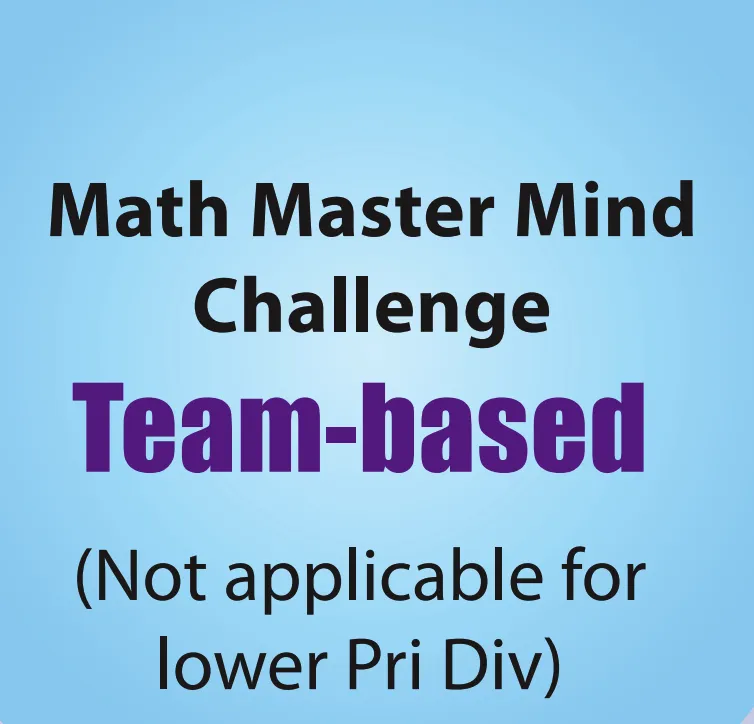
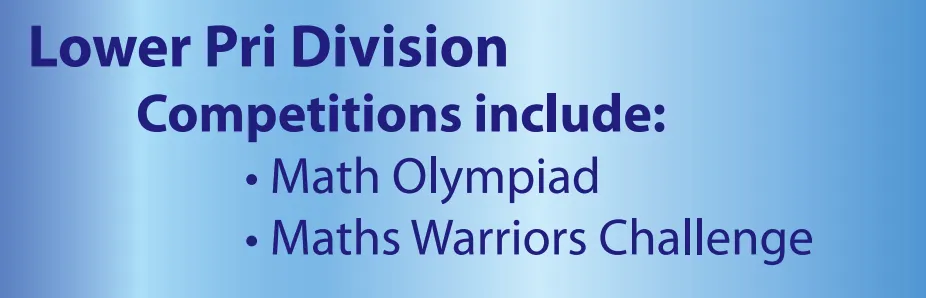
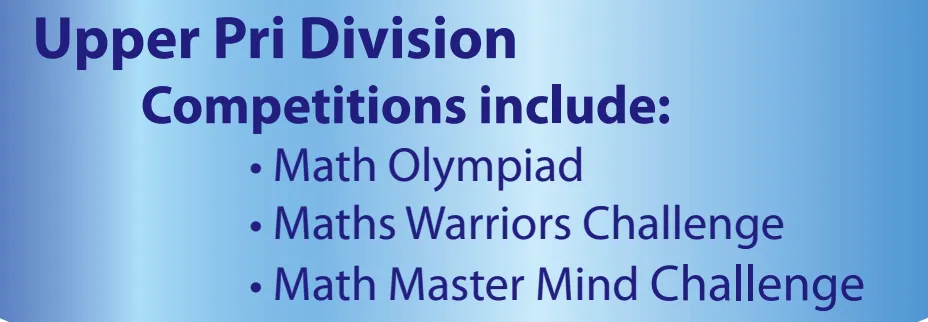
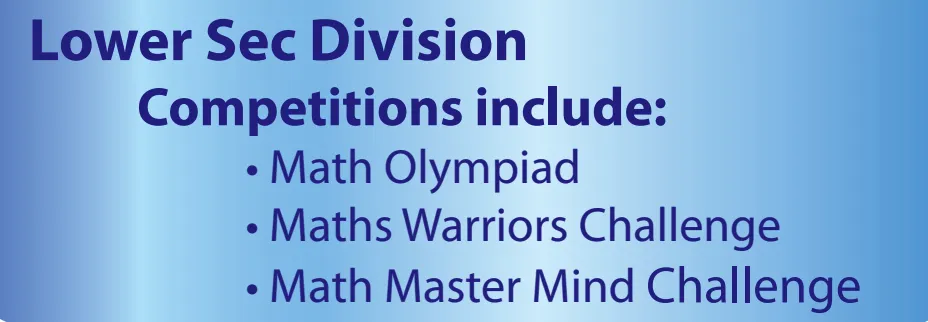
After the individual Math Olympiad round, all students will be divided into 4 di erent divisions, according to their grade to take part in Maths Warriors and Mind Master Mind.
At SIMOC 2026, the students will be grouped into a team of 5 and placed into their division by SIMOC organizers. Each team will be comprised of a member from a di erent country and as much as possible a di erent grade within the same division. Each student will join 4 partners from di erent grades and countries to compete in one of 4 divisions

Competition Categories Format

About SIMOC Singapore International Math Olympiad Challenge
SIMOC Overview
SIMOC is not just an event; it’s the realization of a dream! Merlan Nagidulin, Head Coach of SIMCC and Bronze medalist at the International Mathematics Olympiad (IMO Slovenia 2006), along with Henry Ong, Singapore’s top board and card game designer with over 150 educational games designed for Singapore’s Ministry of Education (MOE), dedicated years to coaching the Singapore and Indonesian National teams for various international math Olympiads from 2013 to 2015. During this time, they identified several areas for enhancement to provide contestants with a richer experience, fostering collaboration and deepening the learning process.
The turning point came around April 8, 2015, when a math problem initially crafted for Aisa’s elite high school students went viral globally. Known as Cheryl’s birthday problem (Cbp), this question, part of the Singapore and Asian Schools Math Olympiad (SASMO), captured the attention of Internet users worldwide. (Read more about it here: https://www.bbc.com/news/world-asia-32297367)
In response to this widespread interest, SIMCC swiftly took action, launching the inaugural Singapore International Math Olympiad Challenge (SIMOC) within four months of the Cbp phenomenon. Drawing on the insights Merlan and Henry had cultivated, SIMCC incorporated innovations to elevate the international contest experience. Henry’s extensive experience in organizing Mind Sport competitions for Singapore’s top schools, coupled with his invention and management of the National Maths Warriors Competitions since 2004, allowed SIMCC to introduce Higher Order Thinking games from Singapore to a global audience. From its modest beginning in 2015, with 418 contestants and 250 teachers/parents from 13 countries and territories, SIMOC has evolved into a truly international event. In 2023, it attracted 1633 contestants and engaged 1255 teachers/parents from 30 countries.
This event, supported by STB, serves as a global platform to nurture and promote mathematical talent, while fostering collaboration between educators
We hope your dreams will come true at SIMOC 2025, just like Merlan and Henry’s dream have come true as we help each and every student and teacher to Acquire Skills, Recognition, and Scholarships for SUCCESS.
Objectives
Igniting Creative Thinking
Encourage contestants to think outside the box, promoting innovative approaches to problem-solving.
Real-life Application
Develop a practical understanding of mathematics and its applicability in real-life scenarios, bridging the gap between theory and practicality.
Cultivating International Understanding
Promote a global perspective by creating a cultural exchange platform for students from diverse countries, fostering mutual learning and understanding.
Confidence Building
Empower participants to tackle complex problems with confidence, enhancing their abilities in comprehension, reasoning, and problem-solving.
Building a Collaborative Network
Establish a lasting network for both students and teachers, encouraging collaboration, knowledge-sharing, and a sense of community.
Credential Enhancement
Provide participants with valuable credentials that can serve as a passport to top educational institutions and open doors to scholarships, ensuring a pathway to academic success.
Math Olympiad Contest

MATH OLYMPIAD CONTEST is an individual online test. The contest consists of 11 differentiated levels: Grades 1 to 11/12 (Primary 1 to Junior College 1/2).
The duration of the contest is 90 minutes and every paper consist of 25 questions Student starts with 15 bonus points and Perfect Score = 85 points.
- Section A
15 Multiple Choice Questions
2 points for each correct answer
0 point for each unanswered question
1 point deducted for each wrong answer - Section B
10 Open-ended Questions
4 points for each correct answer
No penalty for wrong answers
Syllabus
GRADE 1-4 (PRIMARY 1-4)
- Arithmetic and Statistics
- Geometry and Mensuration
- Solving word problems using model method (or any other non-algebraic methods)
- Non-routine problem solving (including number patterns, divisibility tests, spatial visualisation, logic problems and simple cryptarithms)
GRADE 5-6 (PRIMARY 5-6)
- Arithmetic and Statistics
- Geometry and Mensuration
- Solving word problems using model method (or any other methods including algebra)
- Non-routine problem solving (including number patterns, divisibility tests, spatial visualisation, logic problems and cryptarithms)
GRADE 7 (SECONDARY 1)
- Arithmetic and Algebra
- Geometry, Graphs and Mensuration
- Statistics
- Non-routine problem solving (including number patterns, divisibility tests, spatial visualisation, logic problems and cryptarithms)
GRADE 8 (SECONDARY 2)
- Arithmetic and Algebra
- Geometry, Graphs and Mensuration
- Pythagoras’ Theorem
- Statistics
- Non-routine problem solving (including number patterns, divisibility tests, spatial visualisation, logic problems and cryptarithms)
GRADE 9-12 (SECONDARY 3-JC 2)
- Arithmetic and Algebra
- Geometry, Graphs and Mensuration
- Pythagoras’ Theorem and Trigonometry
- Statistics and Probability
- Non-routine problem solving (including number patterns, divisibility tests, spatial visualisation, logic problems and cryptarithms)
Results & Awards
Parents can check the result for the contests on the website and Member Development Portal (MDP) for the statisical report.
All the participants will receive physical certificates. Perfect scorers, Gold, Silver, and Bronze winners will receive medals while Champions, Runner-Ups, and 2nd Runner-Ups will be awarded trophies.
Team winners of Gold, Silver, and Bronze awards will receive a medal and certificate.
